Moving boxes: which types do you need and how many?
Types of moving boxes and their use
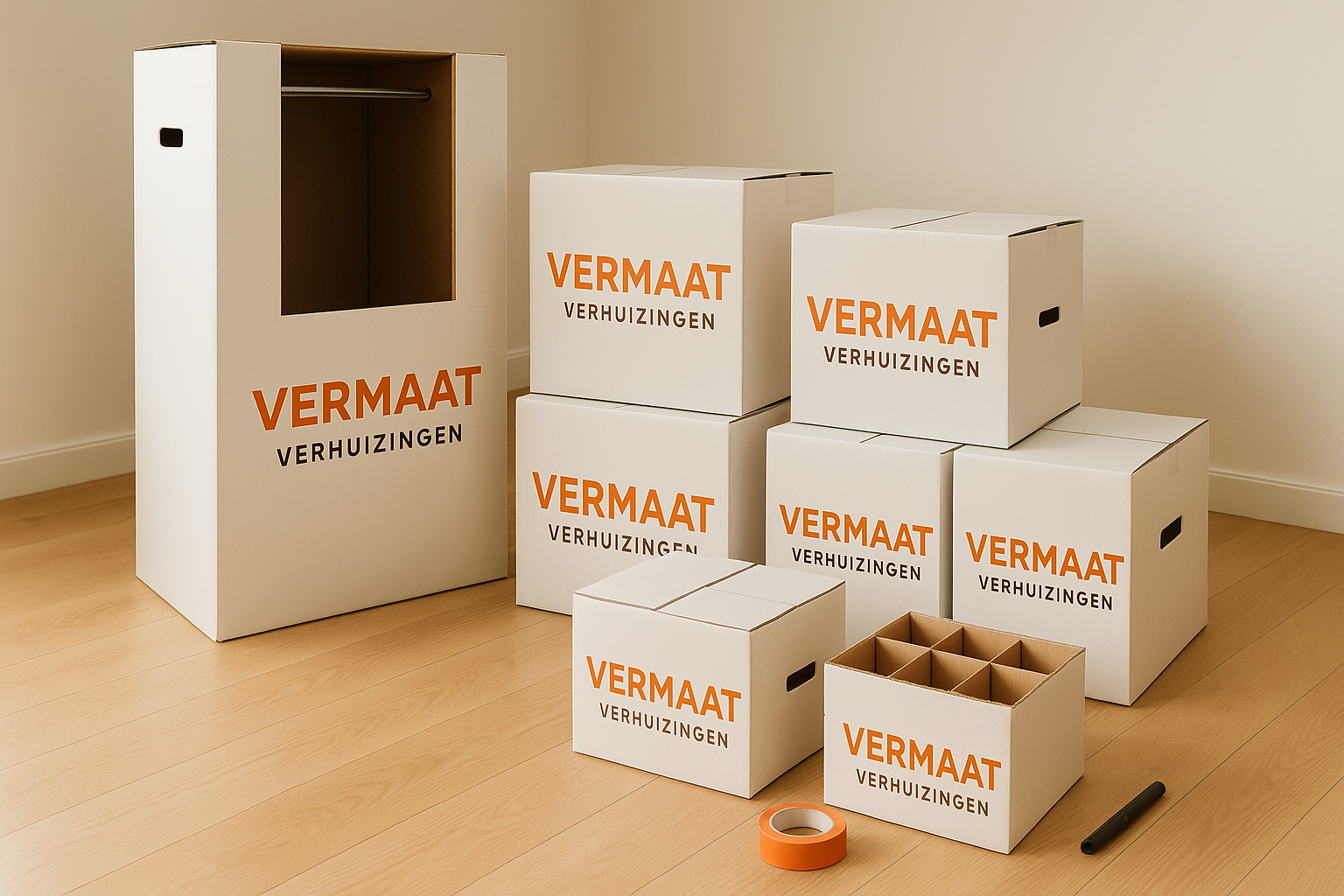
Not every moving box is the same. There are different types, each designed for a specific purpose. The standard moving box (approximately 60x40x40 cm) is the most versatile and suitable for most household items: books, kitchenware, decorations and toys. For heavy items like books and tools, use small boxes (40x30x30 cm), a large box full of books is unmanageably heavy and tears more easily. Wardrobe boxes are tall boxes with a hanging rail inside, perfect for clothes you want to keep on hangers. Glass boxes have internal dividers so glasses, bottles and vases are individually protected. Picture boxes are adjustable flat boxes for paintings, mirrors and TV screens. Special mattress covers protect your mattress from dirt and moisture during transport. And then there are reusable plastic moving crates: sturdier, water-resistant and stackable. You rent them for the duration of your move and they're picked up afterwards. Each type of box has its function, the right mix makes packing easier and prevents damage.
How many boxes do you need?
The number of moving boxes depends on the size of your home, the amount of belongings and whether you've decluttered beforehand. As a rule of thumb, count on ten boxes per room. A two-room apartment thus needs on average twenty to thirty boxes, a family home easily fifty to eighty. If you've lived in the same place for a long time and tend to keep things, add ten to twenty percent extra. A family with children typically needs more boxes due to toys, children's clothing and school supplies. Always order slightly more than you think you need, it's frustrating to run out of boxes halfway through packing. Unused boxes can often be returned or resold. For a more accurate estimate: walk through your home and count the number of shelves, drawers and cabinets that need packing. Each shelf or drawer is roughly one box. This method is surprisingly accurate and prevents ordering too few or far too many.
Where to buy or rent moving boxes?
You have several options for obtaining moving boxes, each with its own pros and cons. Buying new is easiest: hardware stores, webshops and Amazon offer packages for every home size. Prices vary from one to three euros per box, depending on size and quality. Second-hand is cheaper and more sustainable: check marketplace platforms, local Facebook groups or ask supermarkets and shops for empty boxes. Check the condition: choose boxes that are dry and sturdy and haven't previously been used for heavy or wet products. The rental option is the most sustainable: companies rent out sturdy plastic crates that are picked up, washed and re-rented after your move. Costs are slightly higher than new cardboard boxes, but you save on packing materials (the crates are already sturdy and don't need tape) and on waste processing afterwards. Many moving companies also offer moving boxes as part of their package, ask about this when requesting your quote.
Packing, labelling and stacking boxes
Correctly packing boxes is an art many people underestimate. Rule one: heavy items at the bottom, light items on top. A box with books at the bottom and a vase on top is a recipe for damage. Rule two: fill every box completely, empty spaces cause contents to shift and get damaged during transport, and half-full boxes deform when stacked. Use crumpled newspaper, towels or clothing to fill gaps. Rule three: limit weight to a maximum of twenty kilos per box. A heavier box is difficult to lift and increases the risk of injury. Rule four: label each box on at least two sides with contents and destination room. Use a colour code: red for kitchen, blue for bedroom, green for living room. Rule five: seal boxes with at least two layers of tape on the bottom, the bottom carries the full weight and is the weakest point. Rule six: stack boxes with the heaviest at the bottom and lightest on top. And the most important one: write "OPEN FIRST" on the box with your coffee maker and cups.
About Vermaat Verhuizingen
Vermaat Verhuizingen relocates private clients and businesses across the Netherlands. Our articles are written from practical knowledge of the moving trade, from narrow Amsterdam staircases to international moves. More about us →
Ready to move? We'll take care of it
Request a free moving quote and discover how we handle your relocation from A to Z. Personal, professional and fully insured.
Request a quote