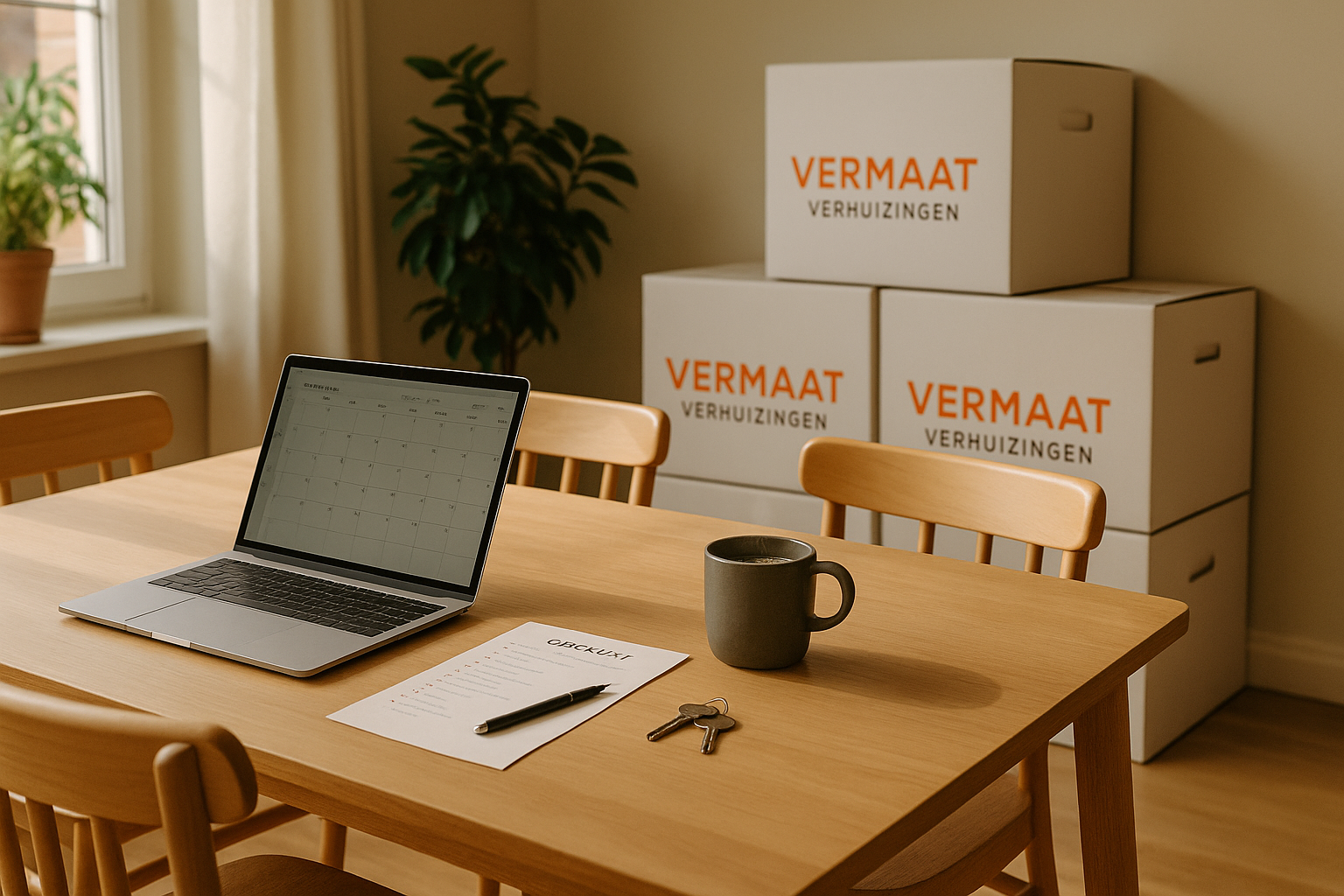
The first step: making decisions
Every move starts with a series of decisions that determine the rest of the process. The most important question: do you do it yourself or hire a moving company? For a small move, think of a studio or single room, you can often manage fine with a rented van and help from friends. But once it involves a multi-room home, valuable furniture or a longer distance move, a professional moving company is not only more convenient but often safer and ultimately not much more expensive. Also consider: when do you want to move? Summer months and the first and last days of the month are peak periods when moving companies are fully booked and rates are higher. Choose a weekday in the off-season and you easily save ten to twenty percent. And the most underestimated decision: how many belongings do you take? This is the moment to critically assess what you truly need. The less you move, the cheaper, faster and simpler the entire process becomes.
Creating a realistic timeline
Most people start too late with their move preparation. A good rule of thumb: start at least eight weeks in advance. The first two weeks are all about the big picture: selecting and booking a moving company, giving notice on your current home or arranging the notarial transfer, and starting to inventory your belongings. Weeks three to six are the execution phase: packing, deregistering and registering with authorities, arranging utilities, submitting address changes and selling or disposing of items you won't take. The last two weeks are the final sprint: packing remaining rooms, disassembling furniture, cleaning and discussing all details with the moving company. It helps enormously to put this timeline on paper or track it in an app like Trello or Notion. Give each task an owner and a deadline. It might sound excessive for a move, but the difference between an organised and chaotic process lies exactly in this preparation. Your future self will thank you.
Budget and financial preparation
A move costs more than most people expect. The biggest expense is the moving company or van rental, but around it is a whole world of additional costs you easily overlook. Packing materials can run up to one to three hundred euros, depending on the scale. Then there's the possible overlap in rent or mortgage: if you can't align dates exactly, you pay double for one or two months. Connection fees for internet, gas, water and electricity at your new address add up. New curtains, lighting or flooring that doesn't fit the new home are hidden costs you need to think about in advance. Create a spreadsheet with all expected costs and add twenty percent as a buffer. Request at least three quotes from moving companies and compare them not just on price but also on what's included. A cheap quote without insurance, without (dis)assembly and without packing materials can end up more expensive than an all-inclusive package. And keep all invoices: moving costs are tax-deductible in some situations.
Finding the right moving company
Choosing a moving company is perhaps the most important decision in your moving journey. Start with online reviews: Google, Trustpilot and social media give an honest picture of other customers' experiences. Don't just look at the average rating but also read how the company responds to negative reviews, that often says more than the positive ones. Check how transparent a company is about its working methods and terms: a professional mover uses clear general conditions, gives a written quote with clear specifications and answers questions about insurance and liability without evasion. Always ask for an in-home inventory, a company that gives a price over the phone without having seen your belongings can never make a reliable quote. During the inventory, you can also get a feel for the company: are they professional, do they listen to your wishes, do they ask the right questions? Ask about the team composition: does the company work with permanent, trained employees or with changing temp workers? And check the insurance conditions: does the company offer additional cover and what is the deductible?
Mental preparation: moving is also emotional
A move is not just a logistics project, it's also an emotional event. You're leaving a place where you made memories, a neighbourhood where you know people, perhaps a city where you grew up. It's perfectly normal to have mixed feelings about that, even if you're excited about your new home. Give yourself space to say goodbye: take a last walk through your neighbourhood, invite neighbours for a farewell drink, take photos of your old house as a keepsake. At the same time, it's important to focus on what's coming. Visit your new neighbourhood in advance, discover local shops and restaurants, take a walk through the park. Mentally build a picture of your new life. And be kind to yourself during the moving process: it's stressful, tiring and sometimes overwhelming. Consciously plan rest moments, eat well, sleep enough and ask for help when you need it. A move is a marathon, not a sprint. The boxes will eventually be unpacked and then the real enjoyment begins.
About Vermaat Verhuizingen
Vermaat Verhuizingen relocates private clients and businesses across the Netherlands. Our articles are written from practical knowledge of the moving trade, from narrow Amsterdam staircases to international moves. More about us →
Ready to move? We'll take care of it
Request a free moving quote and discover how we handle your relocation from A to Z. Personal, professional and fully insured.
Request a quote